
Palpitations: when are they harmless, and when should I see a doctor?
Heart rhythm
· 4 min read
Almost everyone knows the feeling of the heart briefly skipping or missing a beat. Usually these are harmless extra beats, but not always.
Medically reviewed by Dr. med. (Univ. Sousse) Alaeddine Slama, Specialist in internal medicine and cardiology · Last updated: November 2026
A brief stumble, a strong beat, then everything carries on as normal: extrasystoles are extra heartbeats that arise outside the normal rhythm. They are very common and, in a healthy heart, almost always harmless. Stress, lack of sleep, alcohol and nicotine can make them worse; moderate coffee consumption is unproblematic for most people.
When an investigation makes sense
Call 112 immediately: palpitations or a racing heart with fainting, chest pain or shortness of breath. See a doctor promptly: new or persistent palpitations, symptoms during exertion, a persistently irregular pulse, or heart disease or sudden cardiac death in your family.
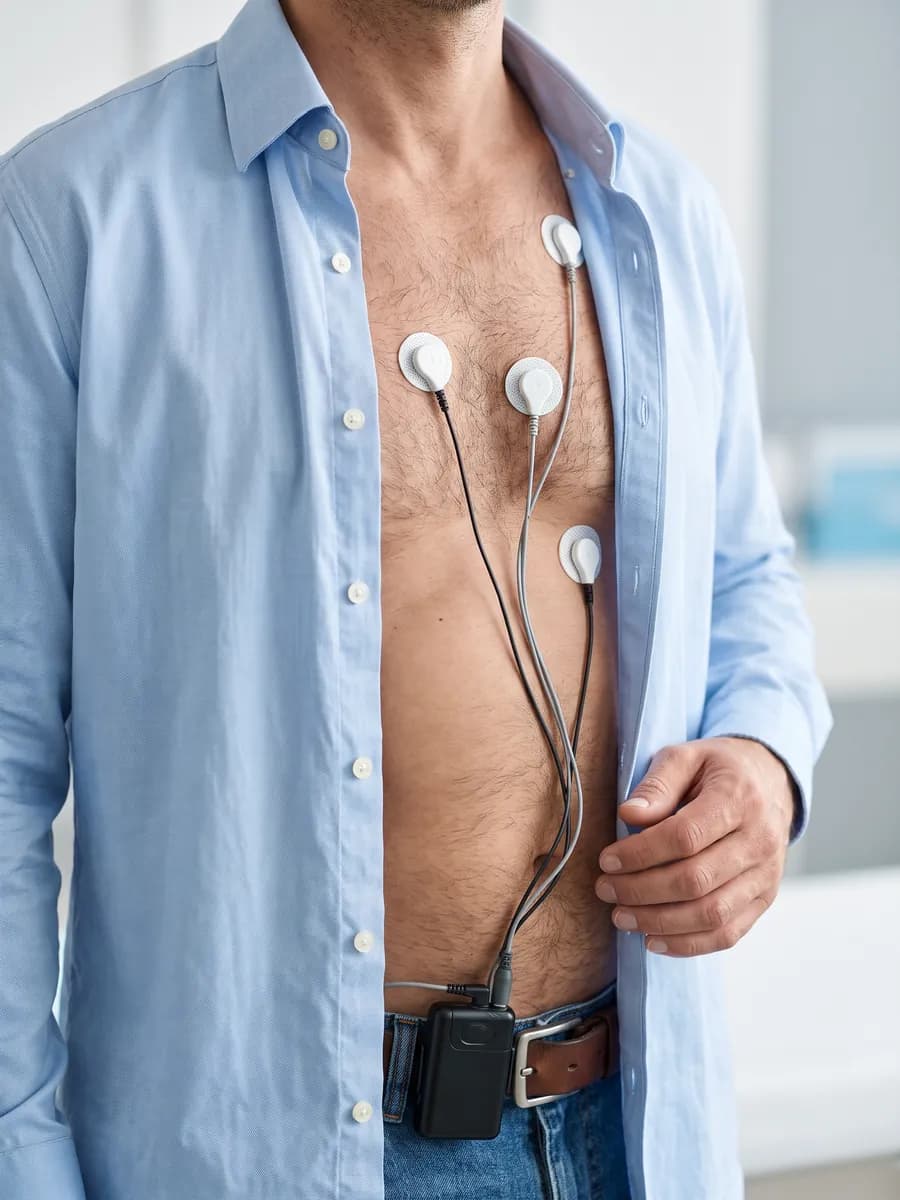
Resting ECG and Holter ECG can usually quickly clarify what type of extra beats you have and whether atrial fibrillation is present. Echocardiography shows whether the heart is structurally healthy.
What you can do yourself
Regular sleep, less caffeine and alcohol, endurance exercise and relaxation techniques noticeably reduce extrasystoles for many people. If symptoms are pronounced, medication helps; catheter ablation is only rarely needed.
This article is for general information only and does not replace medical advice. If you have symptoms, please consult your doctor.
All articles