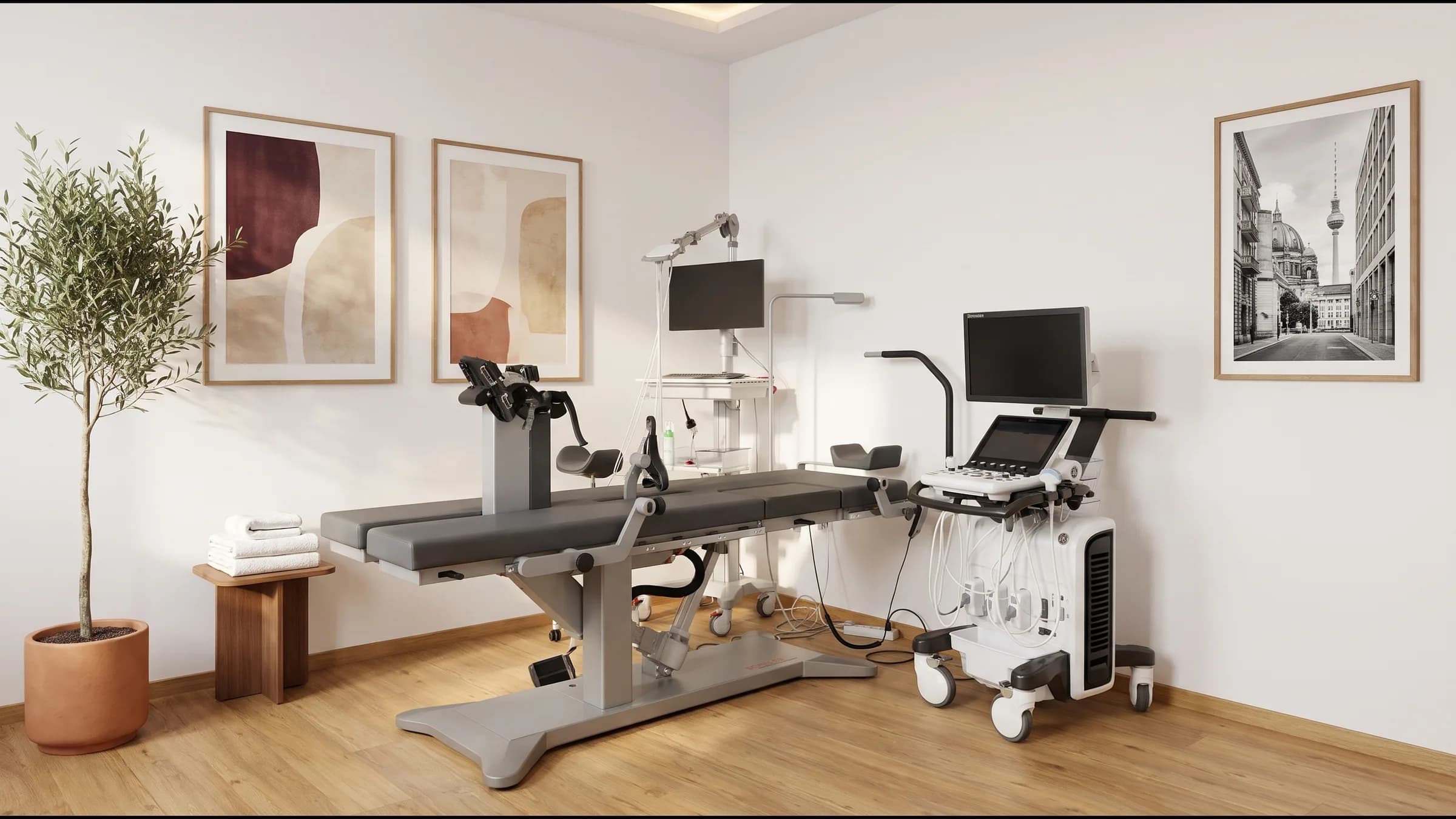
Abdominal ultrasound (ultrasound of the abdomen)
Diagnostics in the practice
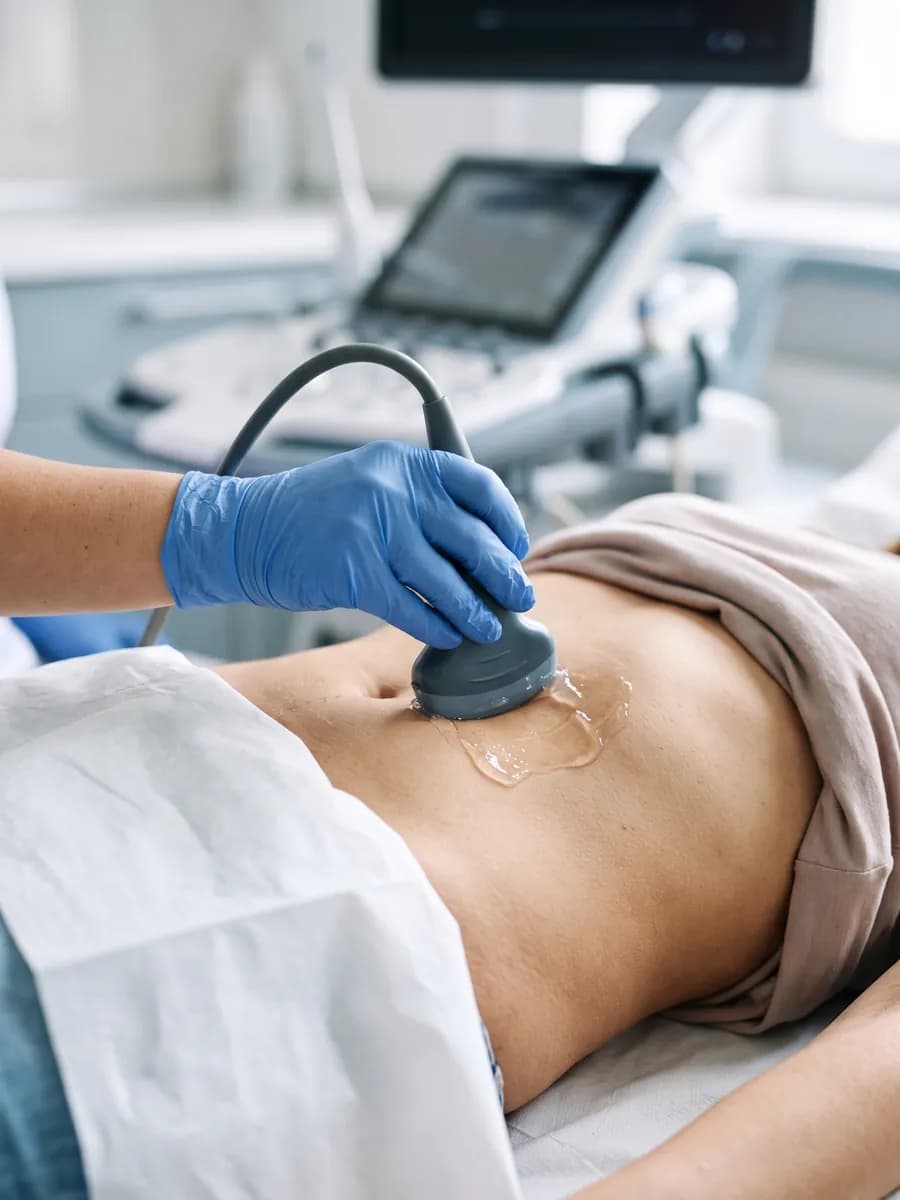
Liver, gallbladder, kidneys, spleen, abdominal aorta and pancreas: examined painlessly and without radiation.
What is it?
Abdominal ultrasound is the gentle baseline examination of the abdominal organs. Using high-resolution ultrasound, we assess the liver, gallbladder and bile ducts, pancreas, spleen, kidneys, bladder and the major abdominal blood vessels.
Of particular importance for heart patients is the assessment of the abdominal aorta: a dilatation (aneurysm) can be detected early. A one-off screening is recommended for men aged 65 and over; it is also worthwhile for women aged 65 and over who have smoked, and for siblings and children of people with an aneurysm from about age 50.
When is the examination useful?
- For abdominal pain, digestive complaints or unexplained laboratory results
- To investigate raised liver values, fatty liver disease (MASLD) or gallstones. For fatty liver, we also assess the risk of liver scarring (FIB-4 index)
- To screen for an abdominal aortic aneurysm
- For reduced kidney function, difficult-to-control high blood pressure or suspected narrowing of the kidney arteries
- As part of the check-up for a specific clinical question
Used in
Procedure
- 01You lie on your back with your abdomen uncovered.
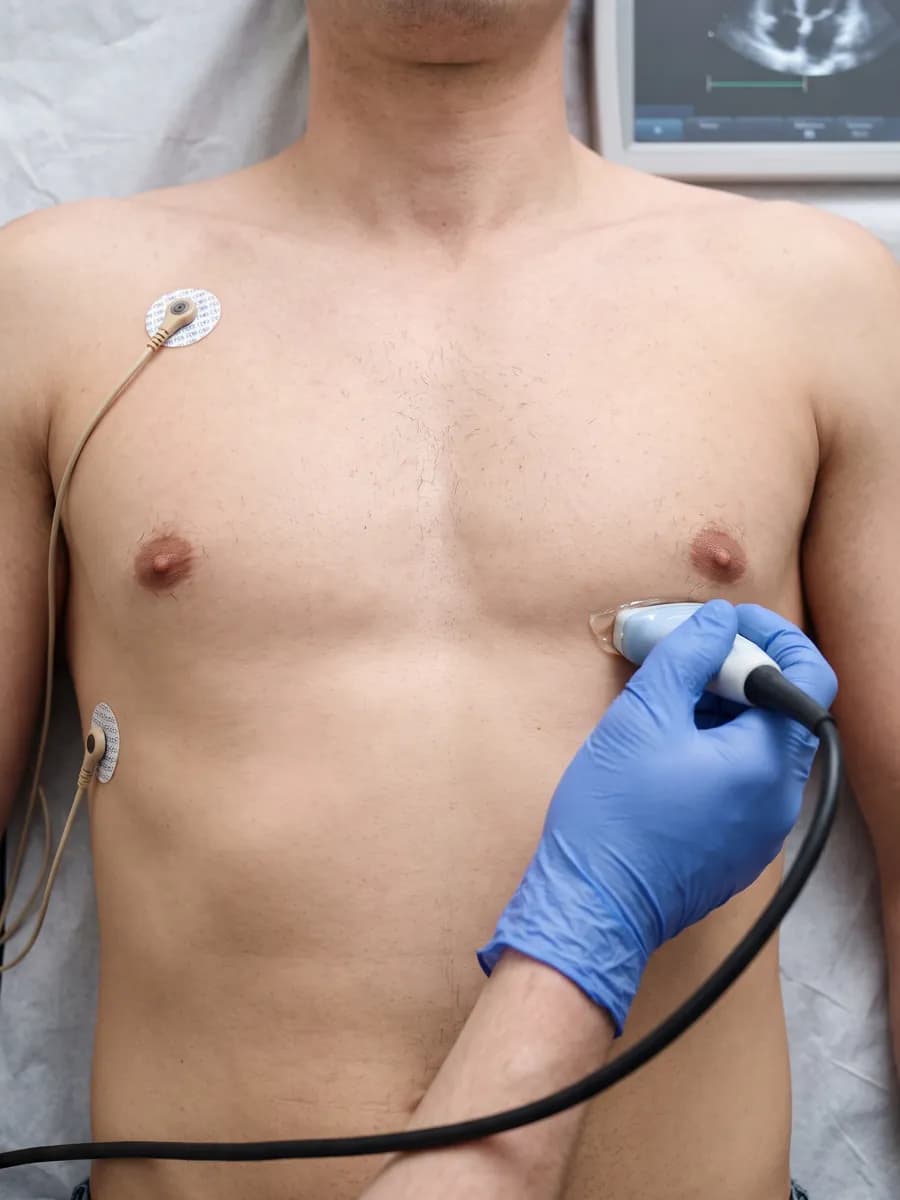
- 02Using contact gel, the probe is moved systematically over all organ regions; occasionally we will ask you to breathe in deeply or turn onto your side.
- 03Any abnormalities are measured and documented.
- 04Findings are discussed immediately afterwards.
Duration & preparation
About 15–20 minutes.
Please come fasting (no food for at least 6 hours, no fizzy drinks) so that the gallbladder and pancreas can be assessed well. For the bladder, please do not go to the toilet immediately beforehand.
FAQ: Abdominal ultrasound

Appointment for Abdominal ultrasound
Online around the clock or by phone during our consultation hours, also at short notice and for self-paying patients.