Heart failure (weak heart)
Heart & circulation
When the heart no longer pumps strongly enough or does not fill properly: we identify the cause and set up your treatment according to current guidelines.
What is it?
In heart failure, the heart can no longer supply the body with enough blood. Based on pumping strength (ejection fraction, EF), the guidelines distinguish three types: reduced ejection fraction (EF below 40%), mildly reduced ejection fraction (EF 40–49%) and preserved ejection fraction (EF 50% or more, HFpEF).
Common causes include coronary artery disease, long-standing high blood pressure, heart valve disease, atrial fibrillation and diseases of the heart muscle. Heart failure can be treated well today – the earlier, the better.
Typical symptoms
- Shortness of breath on exertion, climbing stairs or lying flat
- Waking at night short of breath, sleeping only with the upper body raised
- Swollen ankles or legs, rapid weight gain
- Tiredness, reduced exercise capacity
- Frequent urination at night, palpitations
Emergency: If you have shortness of breath at rest, rapidly worsening breathlessness, chest pain or loss of consciousness, call 112 immediately.
Diagnostics in this clinic
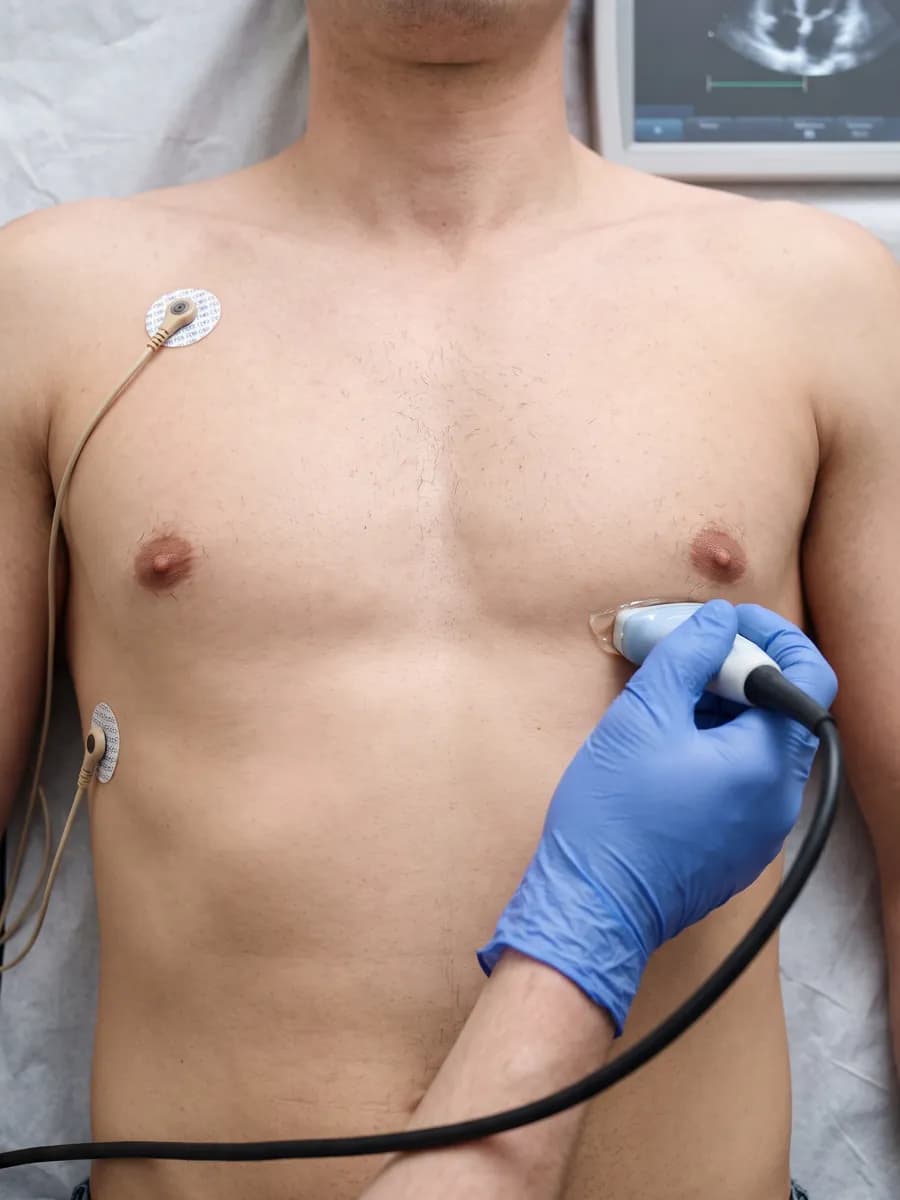
- Echocardiography (heart ultrasound)
- Resting ECG
- Laboratory tests incl. NT-proBNP
- Holter ECG
- Stress echocardiography
In cooperation: lung function testing, cardiac MRI, cardiac catheterisation
How it works
- 01Confirming the diagnosis: detailed consultation, physical examination, ECG, NT-proBNP and heart ultrasound to assess pumping function and filling pressures.
- 02Finding the cause: laboratory tests (kidneys, electrolytes, blood count, iron levels, thyroid, blood sugar) and, if needed, a stress test, Holter ECG or further imaging in cooperation.
- 03Setting up treatment: we build up the core medication recommended by the European Society of Cardiology promptly and step by step – with close checks of blood pressure, pulse, kidney function and potassium. We also treat iron deficiency, high blood pressure, atrial fibrillation and diabetes.
- 04Long-term care: regular check-ups, education on warning signs and self-monitoring, tailored exercise training or rehabilitation. If a defibrillator, a special pacemaker or a valve procedure is an option, we refer you to a heart centre.
After a hospital stay: your first check-up should take place within 1–2 weeks of discharge. Please bring your discharge letter.
Duration & preparation
First appointment approx. 60 minutes including heart ultrasound.
Please bring your medication list, doctors' letters, previous results and, if available, your weight and blood pressure diary.
FAQ: Heart failure
Medically reviewed by Dr. med. (Univ. Sousse) Alaeddine Slama, Specialist in internal medicine and cardiology · Last updated: November 2026

Make an appointment
Online around the clock or by phone during our consultation hours.