Laboratory tests (blood tests)
Diagnostics in the practice
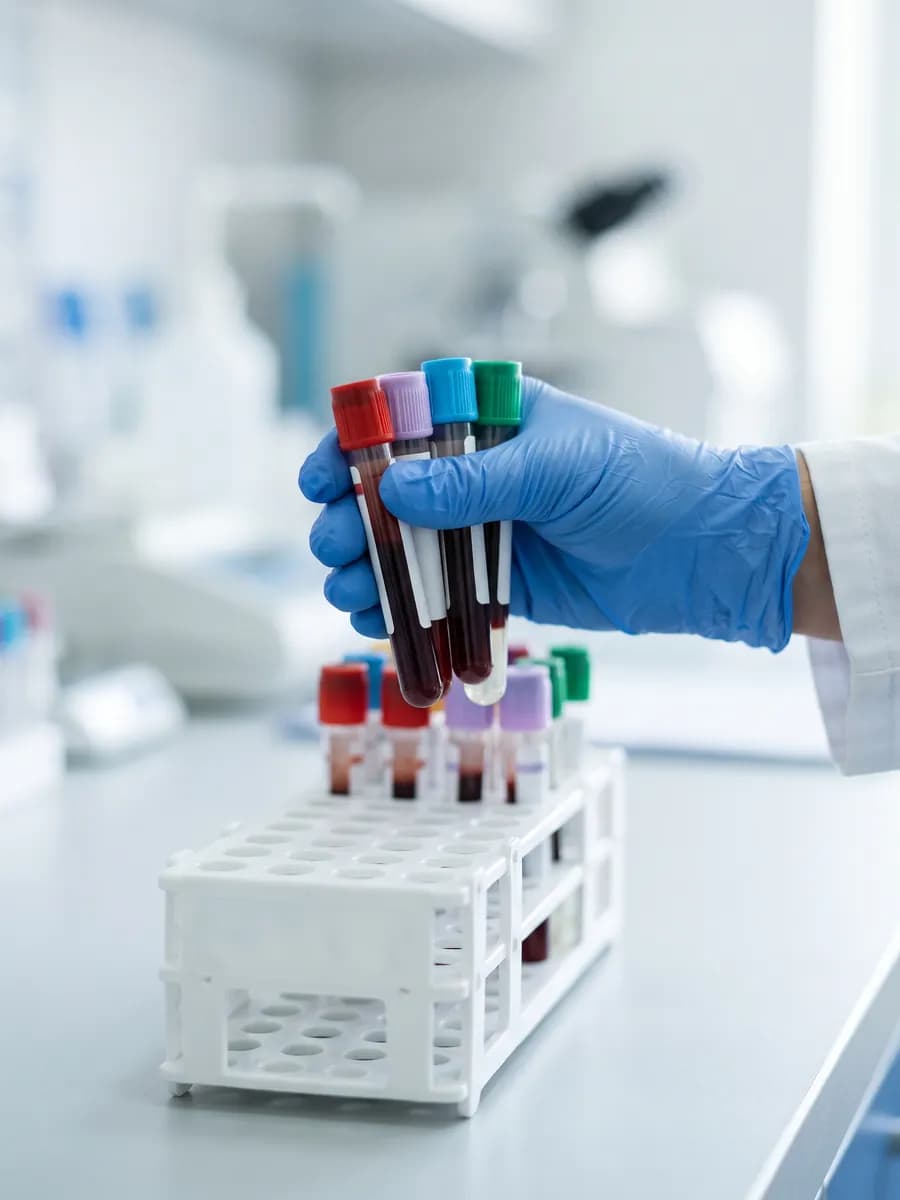
Blood samples taken directly in the practice, from routine values to specialised cardiac and metabolic markers.
What is it?
Laboratory values are a key part of every diagnosis. We take blood and other samples directly in the practice and work with an accredited partner laboratory; most results are available the following day.
In addition to routine values such as full blood count, liver, kidney and thyroid function, we measure specific cardiac markers: lipid profile including lipoprotein(a), NT-proBNP for diagnosing and monitoring heart failure, high-sensitivity troponin (in the laboratory, e.g. for suspected heart muscle damage or before surgery in at-risk patients), HbA1c, electrolytes and clotting values. For kidney function, in addition to creatinine we measure the estimated glomerular filtration rate (eGFR) and urine albumin. These two values are the basis for early detection of chronic kidney disease.
When is the examination useful?
- As part of preventive care and check-ups
- To investigate symptoms such as tiredness, shortness of breath or reduced exercise tolerance
- For treatment monitoring: kidney function and blood count with direct oral anticoagulants (DOACs), INR with phenprocoumon, liver values after starting a statin, electrolytes and kidney function with diuretics, ACE inhibitors, ARBs, ARNI, MRA or SGLT2 inhibitors
- To assess cardiovascular risk (lipid profile, lipoprotein(a))
- Before surgery, if pre-existing conditions or medication require it
Used in
- Heart failure (weak heart)
- Heart valve disease (heart murmur, leaking or narrowed valve)
- Coronary artery disease (chest pain, chest tightness)
- Arterial hypertension (high blood pressure)
- Diabetes mellitus & prediabetes (high blood sugar)
- Thyroid disease (underactive/overactive thyroid, Hashimoto's, nodules)
- Anaemia (low blood count) & iron deficiency
- Pre-operative assessment (check before surgery)
Procedure
- 01Blood sample taken in the practice, usually in the morning. Fasting is only needed for certain values. We will let you know in advance.
- 02Samples are sent to our partner laboratory; some values, such as clotting (INR), can be measured immediately in the practice.
- 03Results are usually available on the next working day.
- 04Discussion of the results at a follow-up appointment or by phone; you will receive a printout.
Duration & preparation
Blood sampling takes around 5–10 minutes.
You do not need to fast for blood lipids; for fasting blood glucose, please do not eat for 8 hours. Drink plenty of water, as this makes taking blood easier.
FAQ: Laboratory diagnostics
Appointment for Laboratory diagnostics
Online around the clock or by phone during our consultation hours, also at short notice and for self-paying patients.