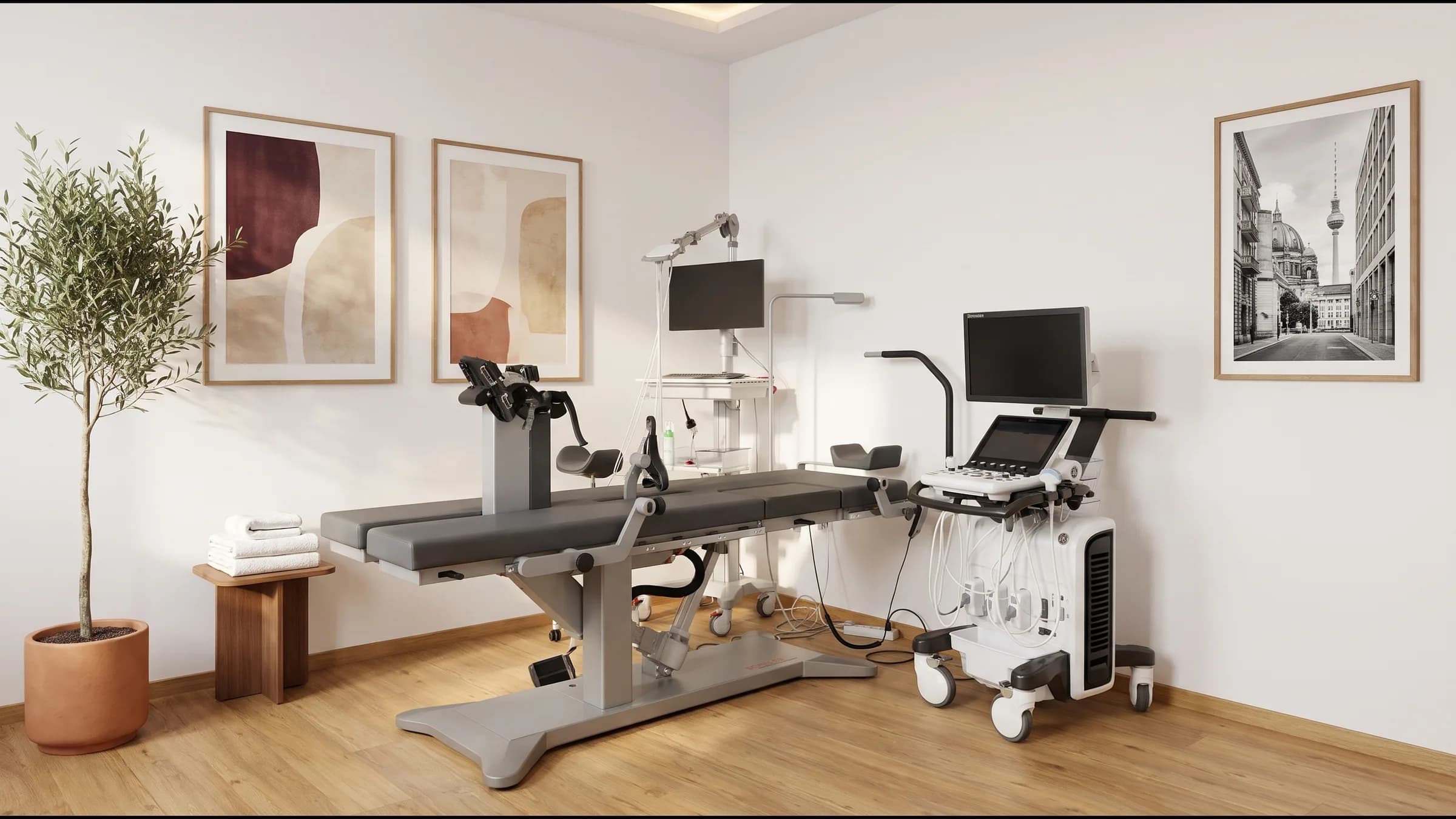
Stress echocardiography (heart ultrasound under exercise)
Diagnostics in the practice
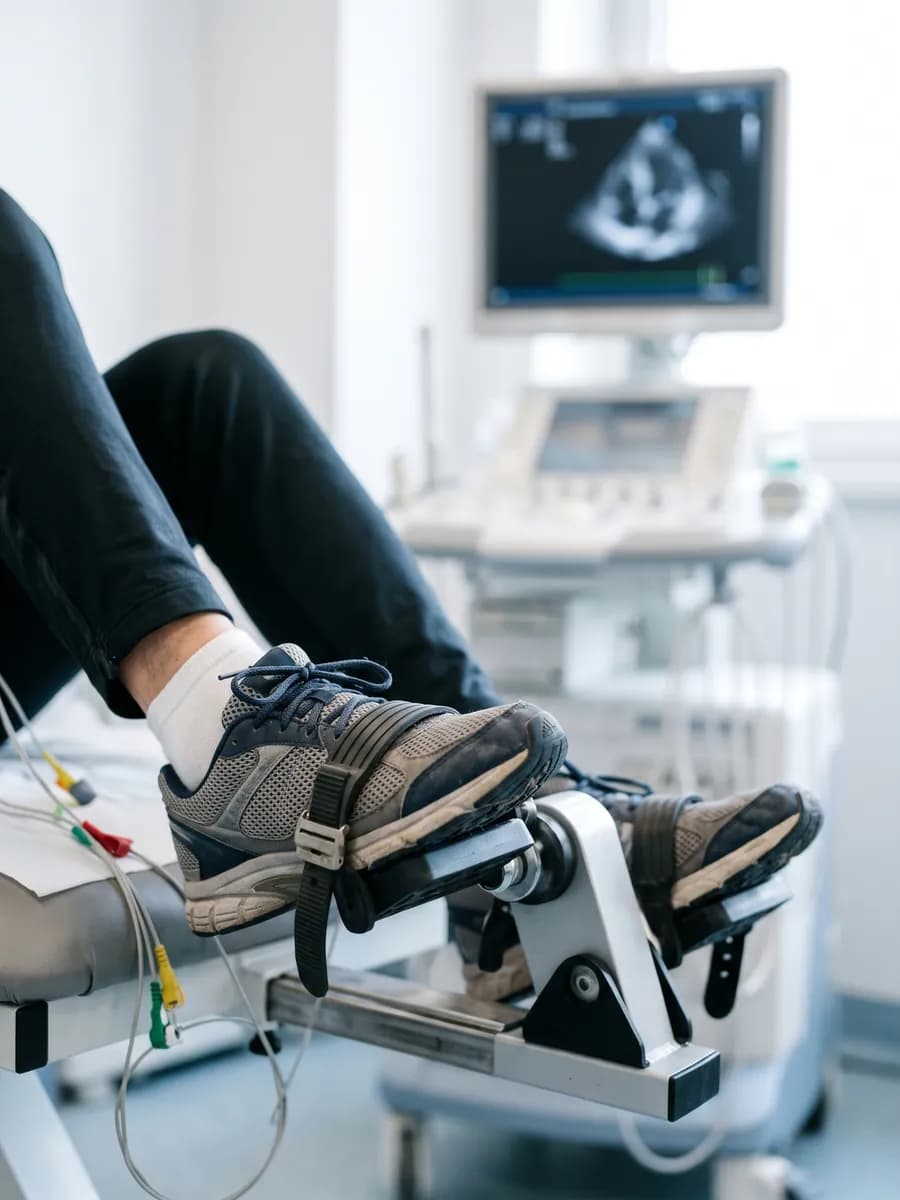
Ultrasound of the heart under stress: a radiation-free, well-established method for detecting exercise-induced reduced blood flow to the heart muscle.
What is it?
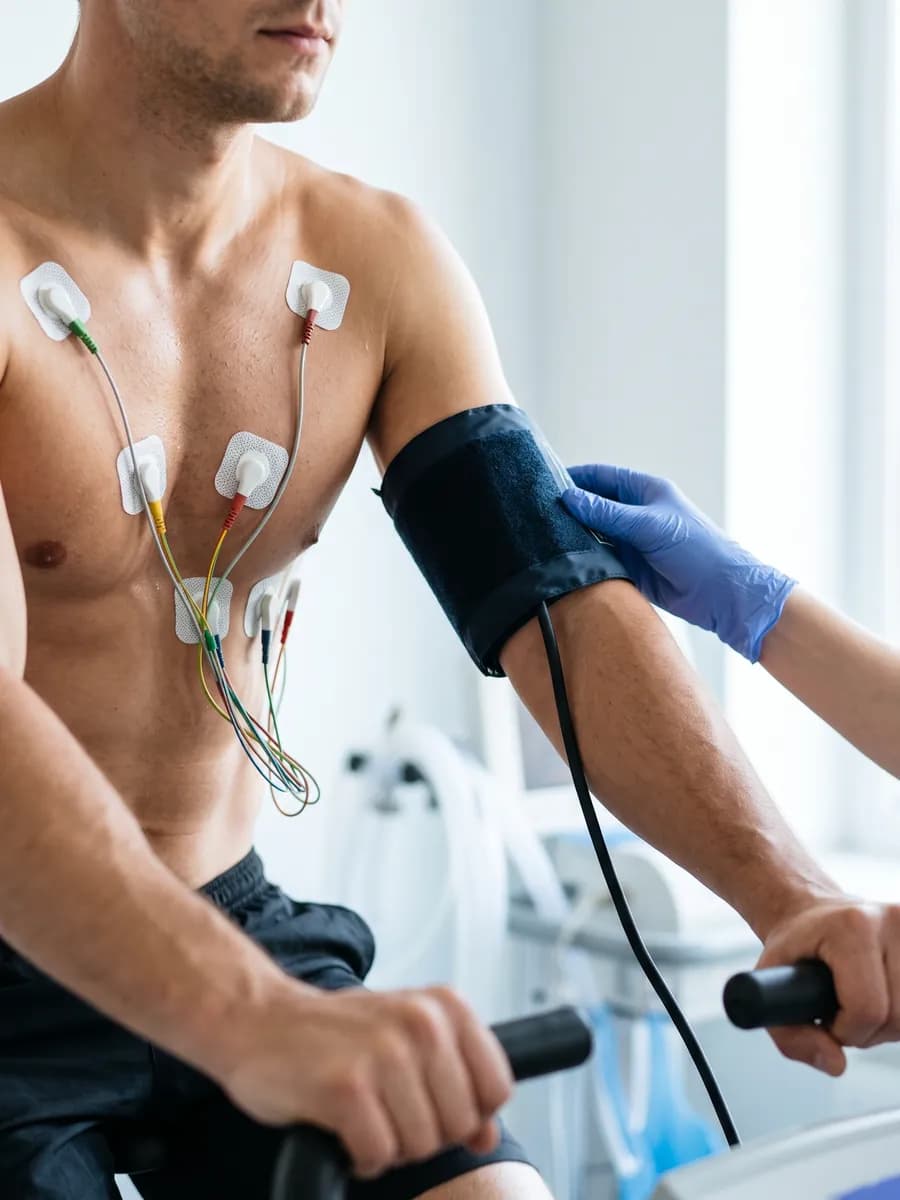
In stress echocardiography, we combine cardiac ultrasound with controlled stress. This is either physical, on a semi-recumbent ergometer, or induced with a short-acting drug that speeds up the heartbeat.
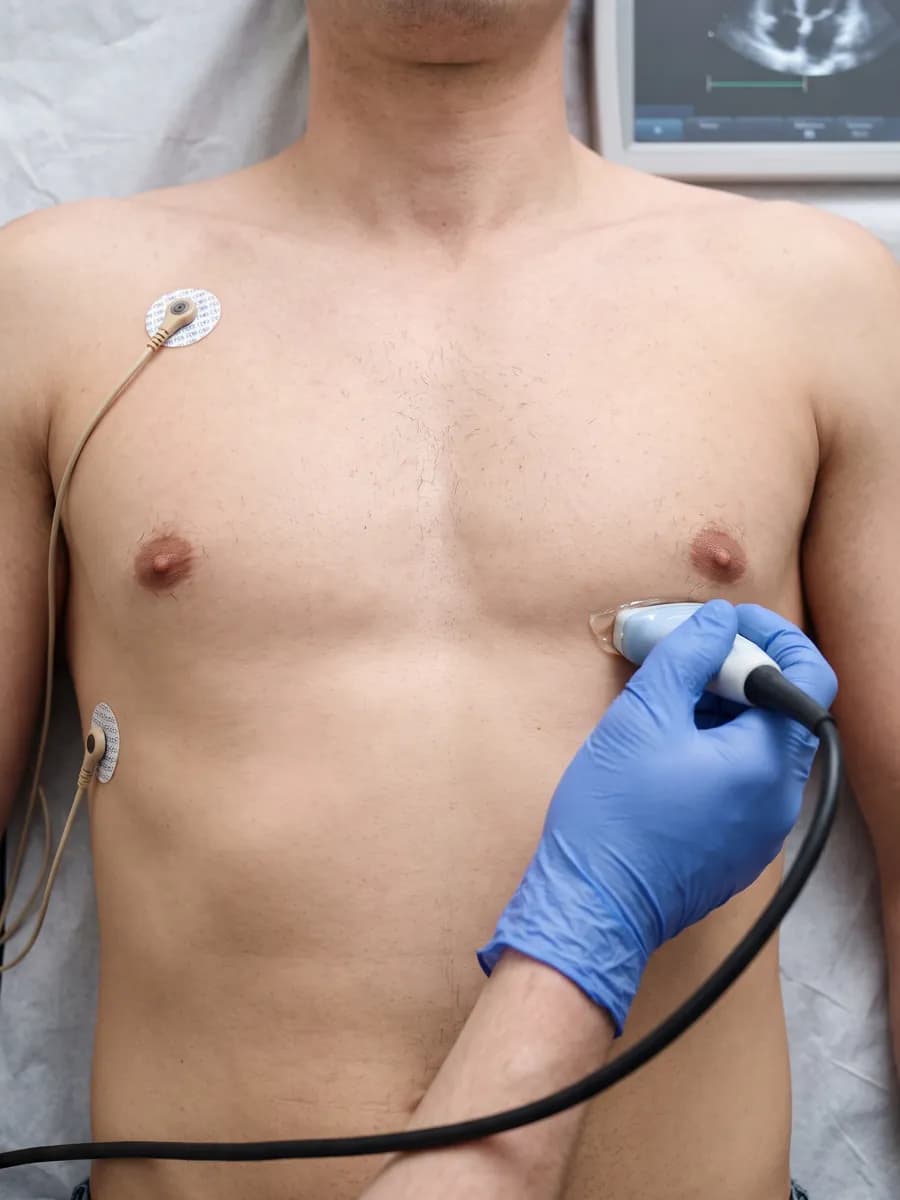
Areas of the heart muscle wall that receive less blood under stress move visibly less. This allows us to reliably detect whether narrowed coronary arteries reduce blood flow under stress, without radiation and without cardiac catheterisation. If image quality is limited, we use a well-tolerated ultrasound contrast agent.
When is the examination useful?
- For suspected coronary artery disease, as the preferred stress test with imaging
- To assess the significance of known narrowings of the coronary arteries
- After a stent or bypass, if symptoms recur or for a specific clinical question
- Before high-risk surgery if your exercise capacity is limited and you have cardiovascular risk factors
- For heart valve disease, e.g. aortic stenosis with a low pressure gradient or severe valve disease without symptoms
- For unexplained breathlessness on exertion and suspected heart failure with preserved pumping function (diastolic stress echo)
Used in
Procedure
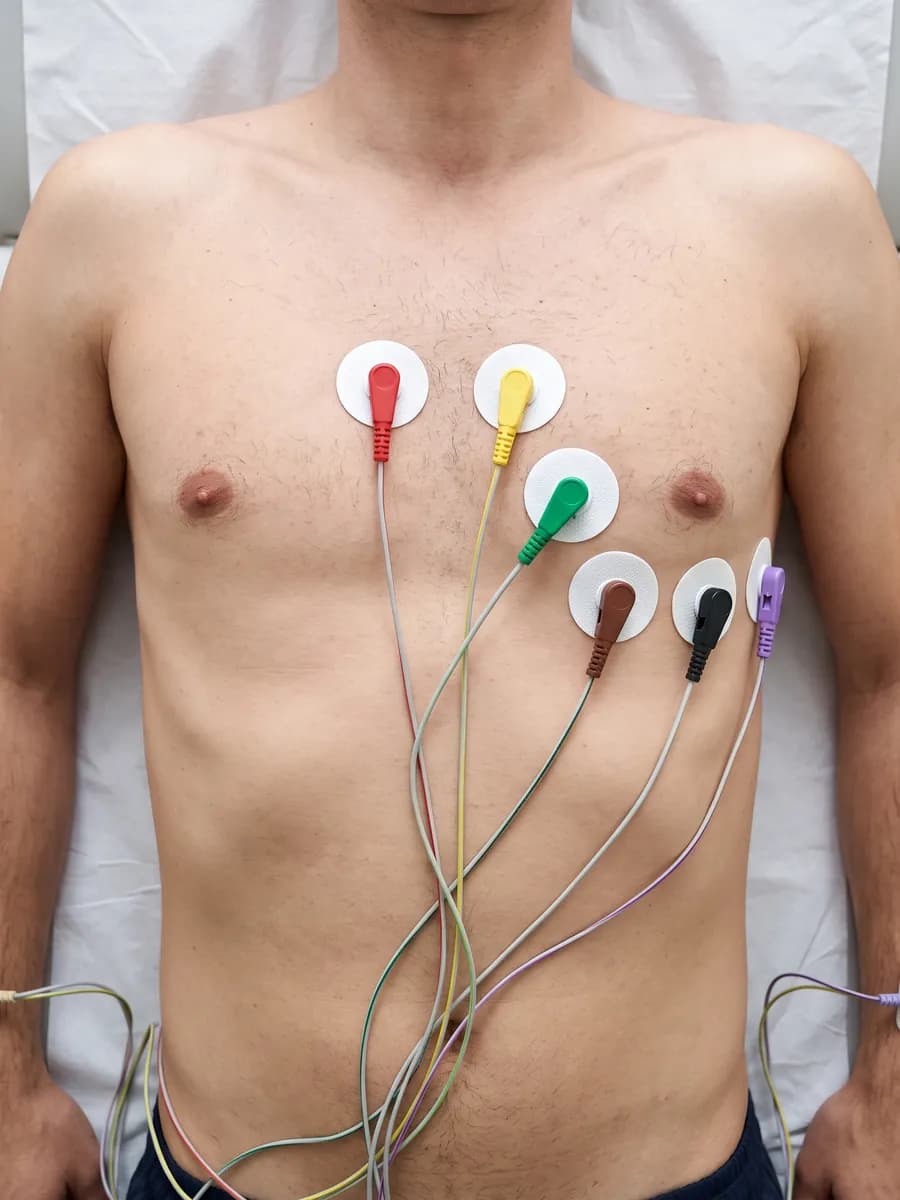
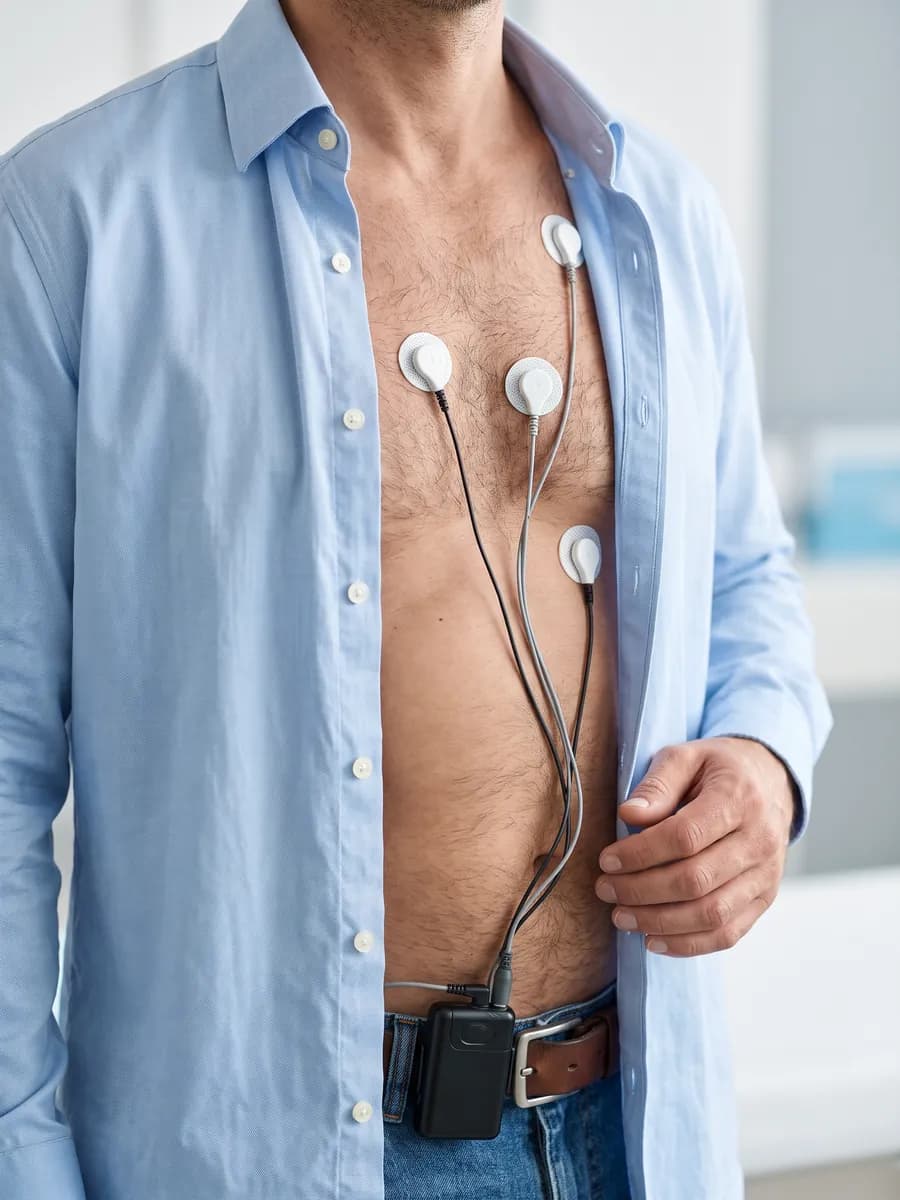
- 01We place an intravenous line (for pharmacological stress) and ECG electrodes.
- 02First, ultrasound images are recorded at rest from several angles.
- 03The workload is increased step by step; at each stage, new images are taken and the ECG and blood pressure are monitored.
- 04After a recovery phase, we compare the images from all stages and discuss the result with you.
Duration & preparation
Around 45–60 minutes, including preparation and post-test monitoring.
Please eat only lightly for 2–3 hours beforehand and do not smoke. Whether beta blockers or other heart-rate-lowering drugs should be paused will be decided with you individually. Please do not stop anything on your own. After pharmacological stress you must not drive for several hours; please arrange for someone to accompany you or use public transport.
FAQ: Stress echocardiography
Appointment for Stress echocardiography
Online around the clock or by phone during our consultation hours, also at short notice and for self-paying patients.