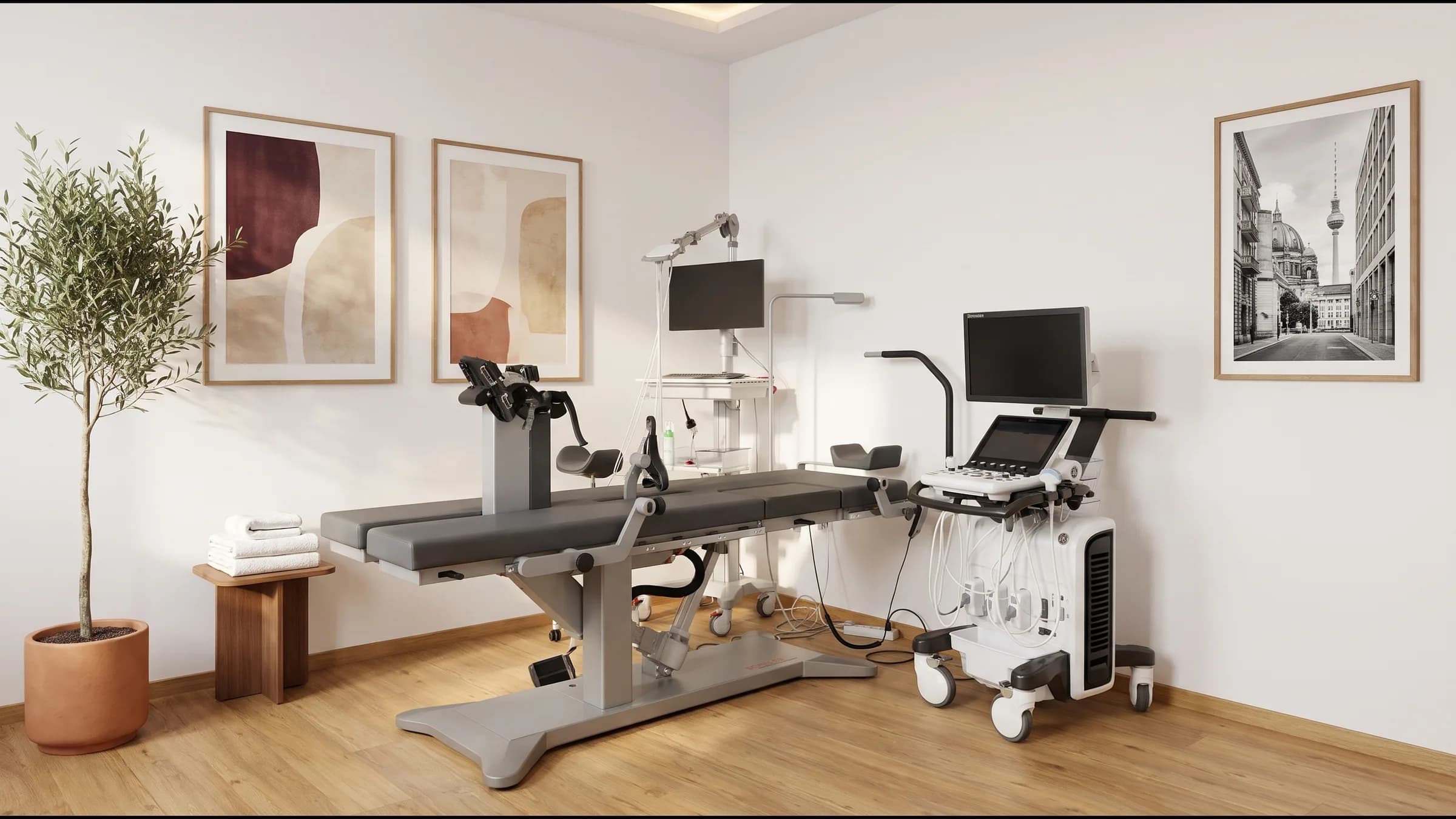
Resting ECG (heart tracing)
Diagnostics in the practice
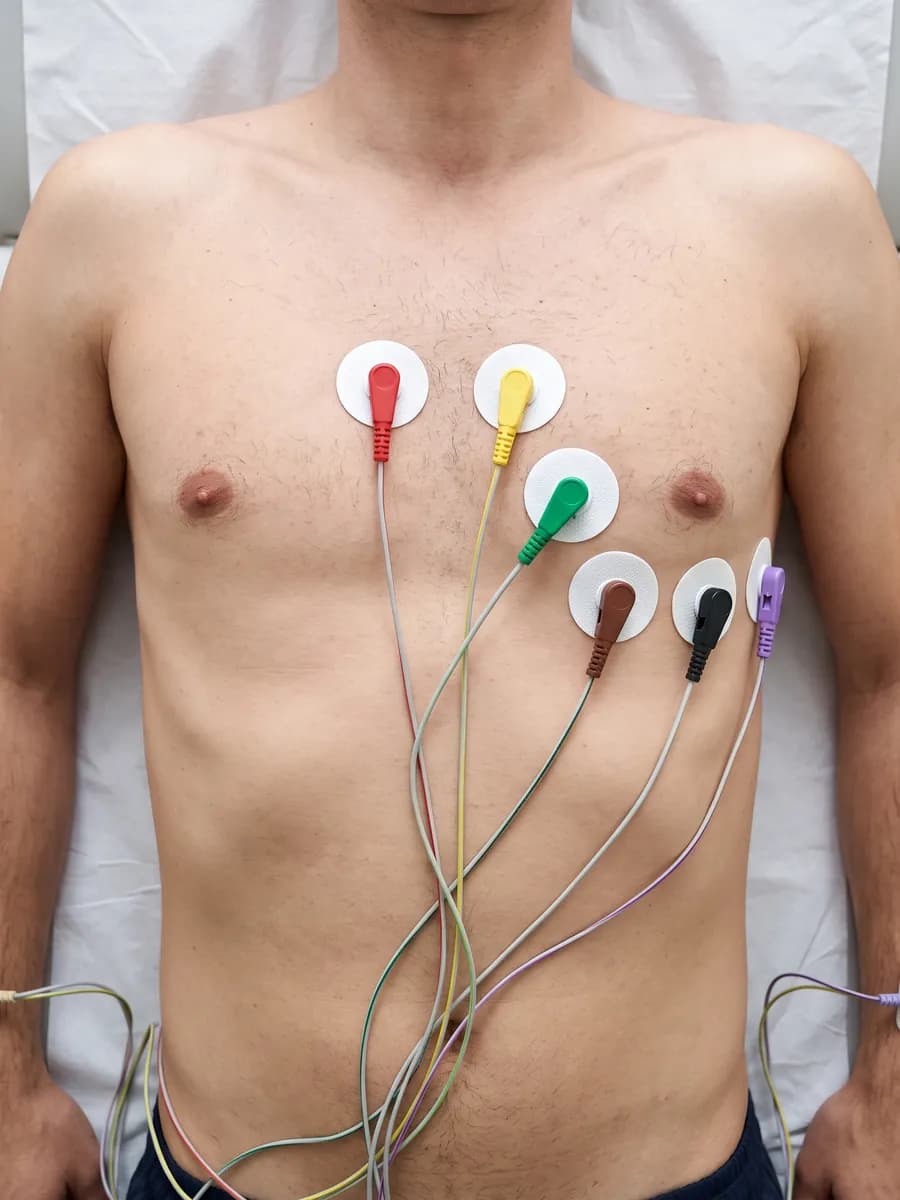
The basic cardiac examination: in just a few minutes, we record the electrical activity of your heart.
What is it?
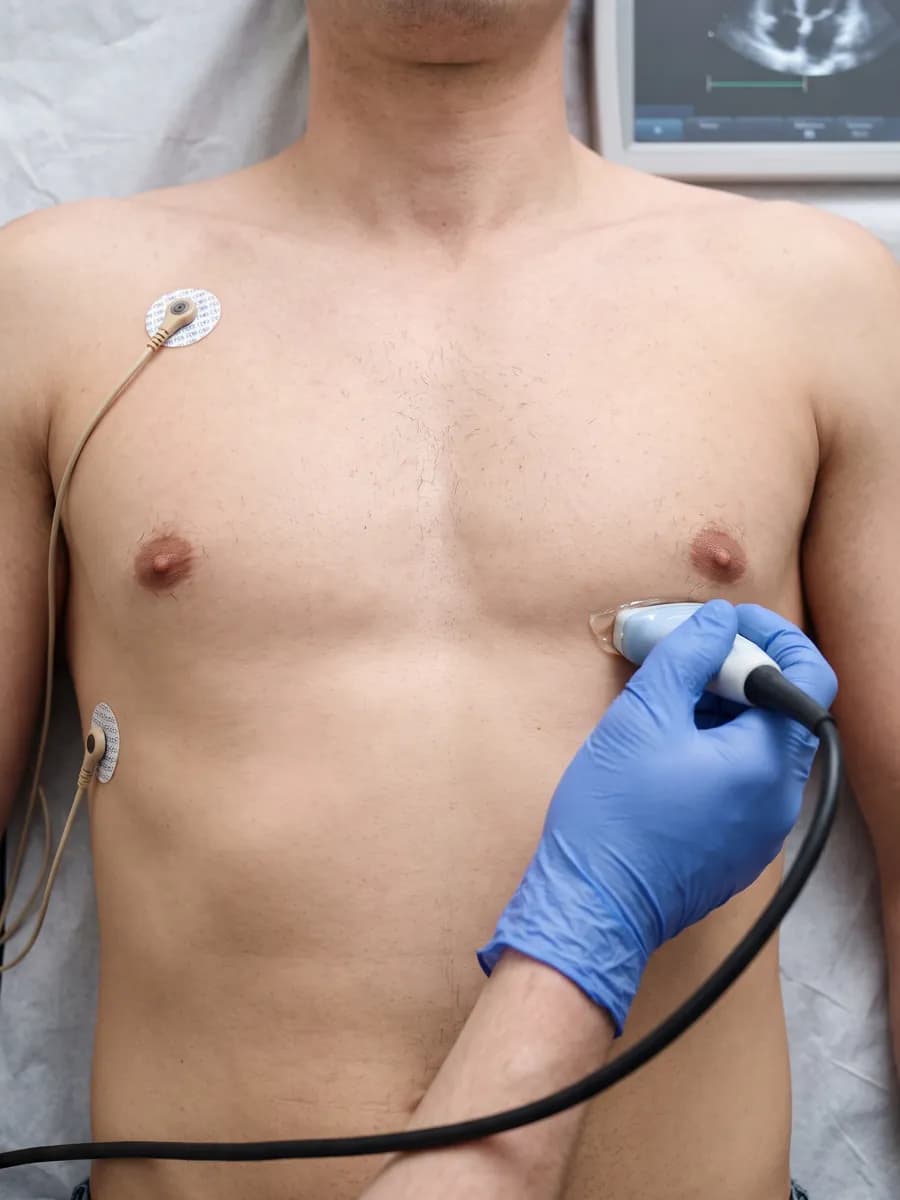
The electrocardiogram (ECG) records the electrical impulse that travels through the heart muscle with every heartbeat. Using twelve leads (ten electrodes on the chest, arms and legs), it produces a detailed picture of your heart rhythm and electrical conduction within seconds.
A resting ECG is completely painless, involves no radiation and is part of every initial cardiological examination. It provides indications of heart rhythm disorders such as atrial fibrillation, a previous heart attack or reduced blood flow, thickening of the heart muscle, conduction disorders and rare inherited conditions (e.g. WPW, long QT or Brugada syndrome). However, a normal resting ECG does not rule out heart disease.
When is the examination useful?
- For palpitations, a racing heart or an irregular pulse
- For long-standing or exertion-related chest pain, chest tightness or shortness of breath
- After a brief loss of consciousness (syncope) or for dizziness with palpitations: here the ECG is part of the basic assessment
- For high blood pressure, diabetes or other cardiovascular risk factors, and from age 65 to look for undetected atrial fibrillation
- Before intermediate- or high-risk surgery if you have risk factors, heart disease or are aged 65 or over, and to monitor known heart conditions
- When taking medication that can prolong the QT interval (e.g. certain antiarrhythmics, antidepressants, antibiotics)
- Before starting competitive sport
- To confirm an abnormal smartwatch reading
Emergency: If you have sudden or persistent chest pain, chest pain at rest, loss of consciousness, a racing heart with dizziness or shortness of breath, call 112 immediately. Booking an appointment is not the right step in this situation.
Used in
Procedure
- 01You undress to the waist and lie down comfortably on the examination couch.
- 02Our medical assistants attach ten adhesive or suction electrodes to your chest, wrists and ankles.
- 03The recording takes about ten seconds. Please lie still and breathe normally.
- 04Your cardiologist interprets the ECG personally and does not rely on the automatic machine reading alone. He compares it with previous ECGs and discusses the result with you straight away.
Duration & preparation
Examination time: about 5 minutes including preparation.
No special preparation is needed. Please avoid oily body lotion on the day of the examination so that the electrodes adhere well.
Please bring previous ECGs, your current medication list and, if applicable, your pacemaker ID card. You are welcome to show us ECG recordings from your smartwatch.
FAQ: Resting ECG
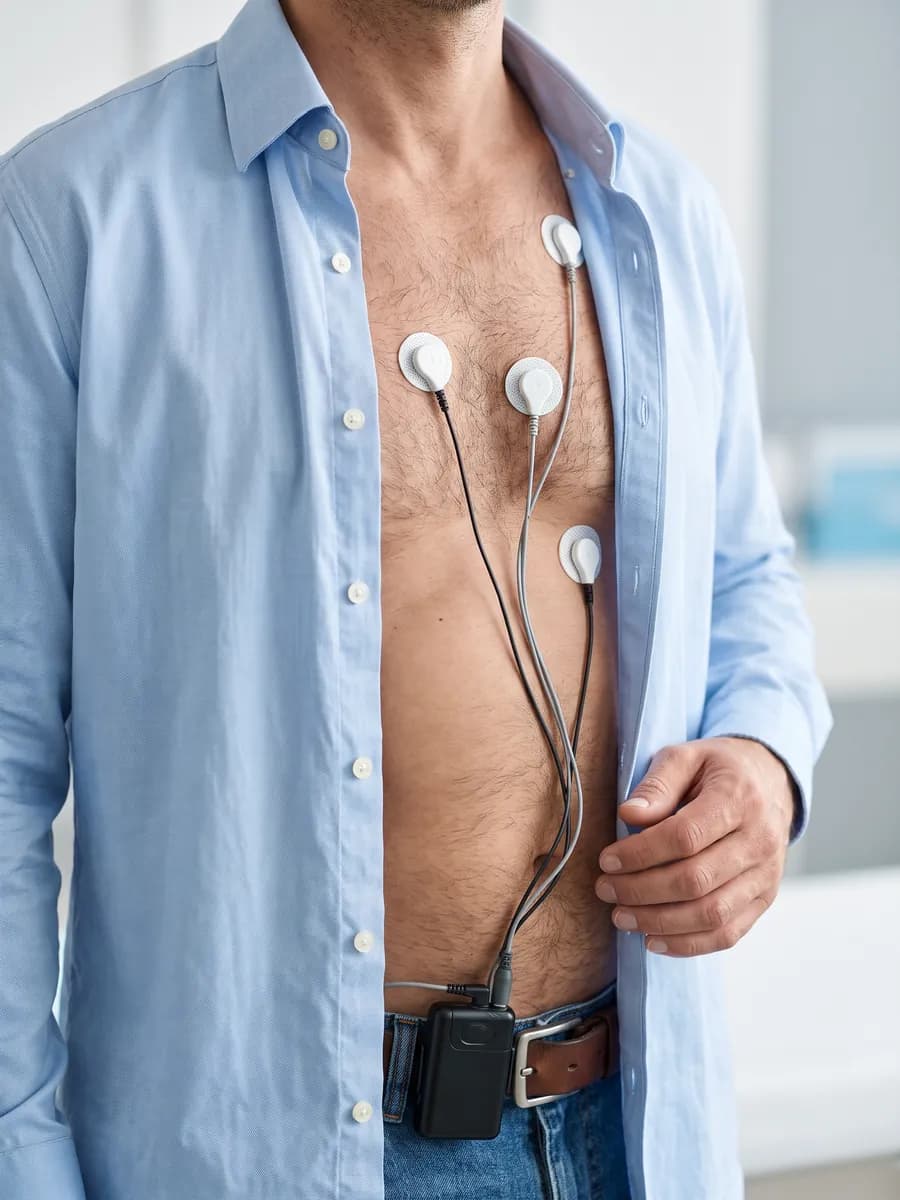
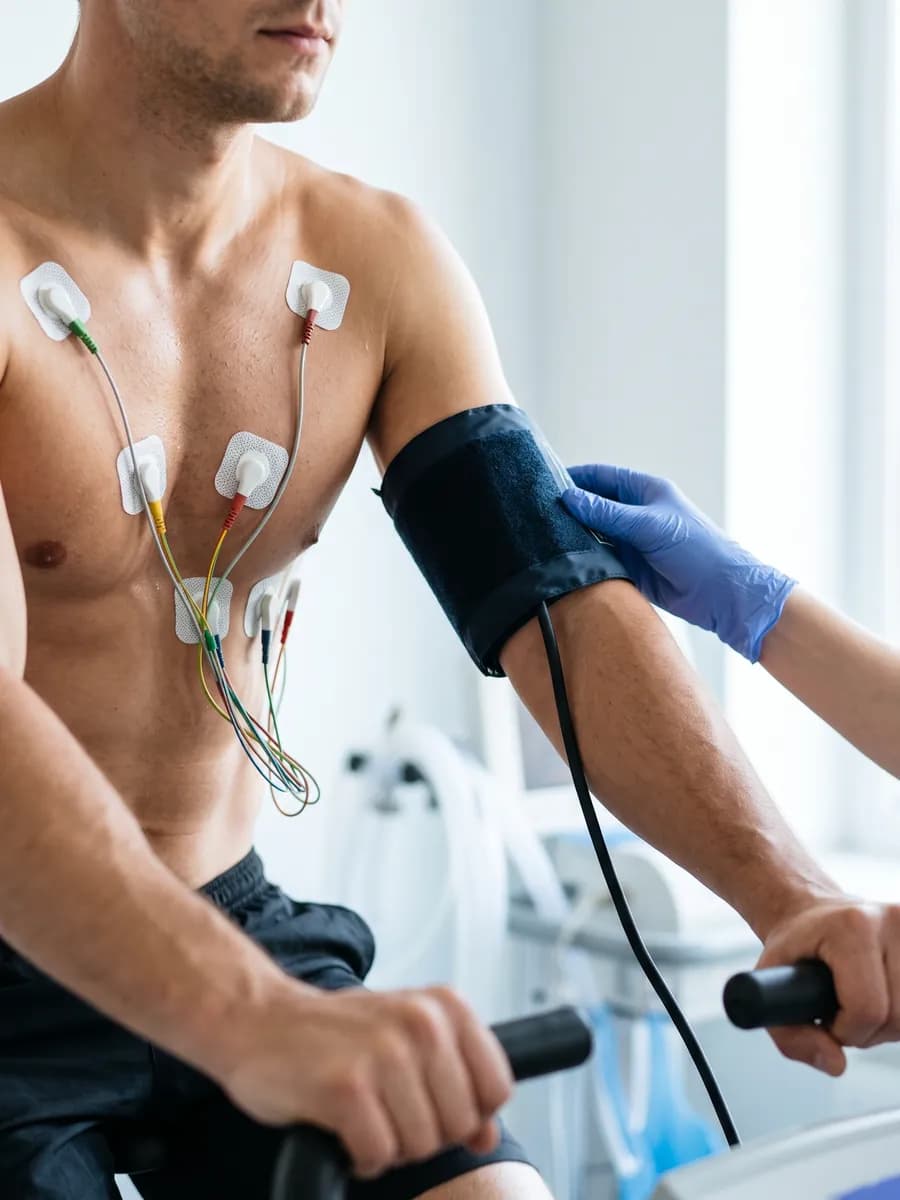
Appointment for Resting ECG
Online around the clock or by phone during our consultation hours, also at short notice and for self-paying patients.