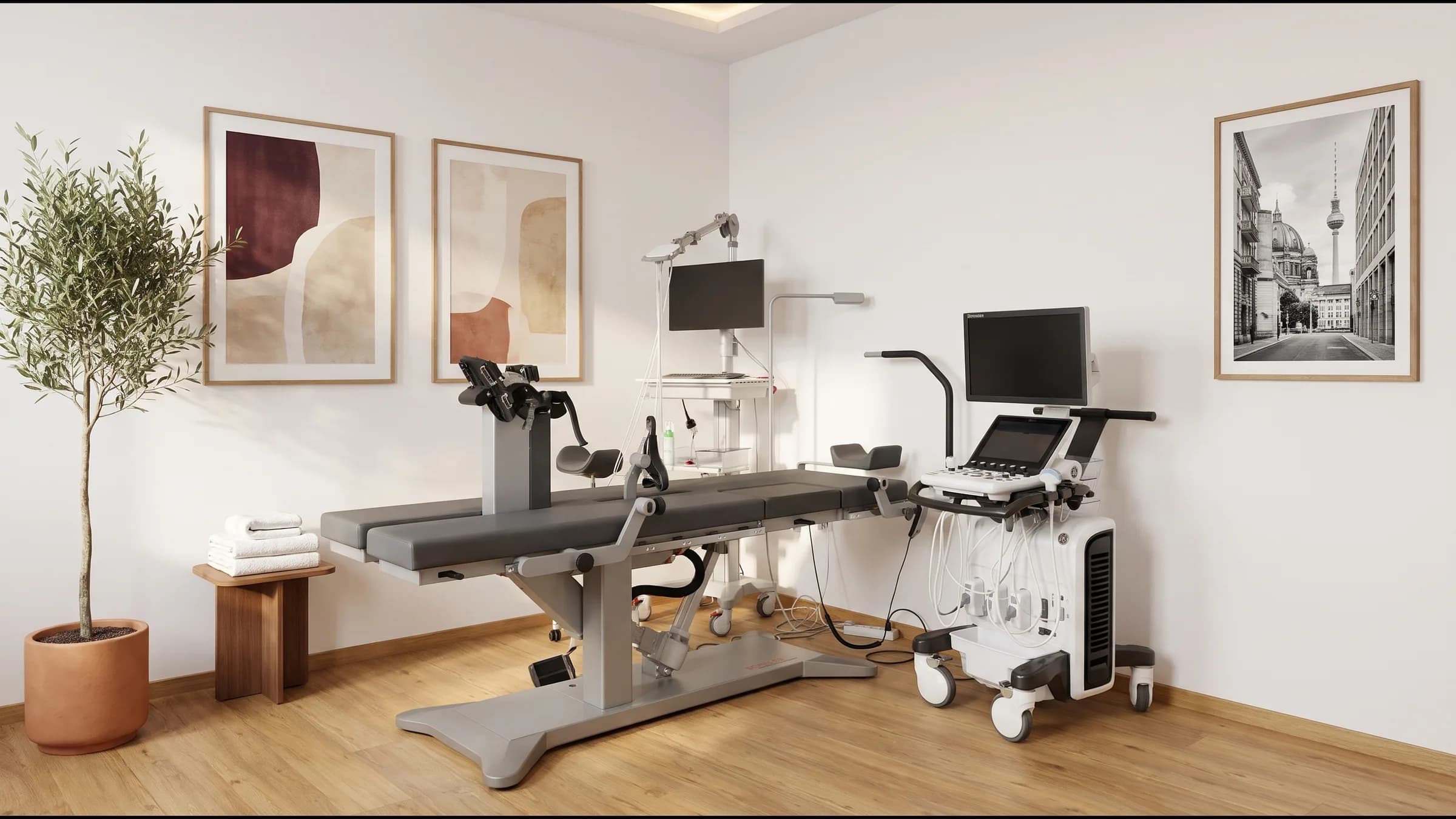
Heart valve disease (heart murmur, leaking or narrowed valve)
Heart & circulation
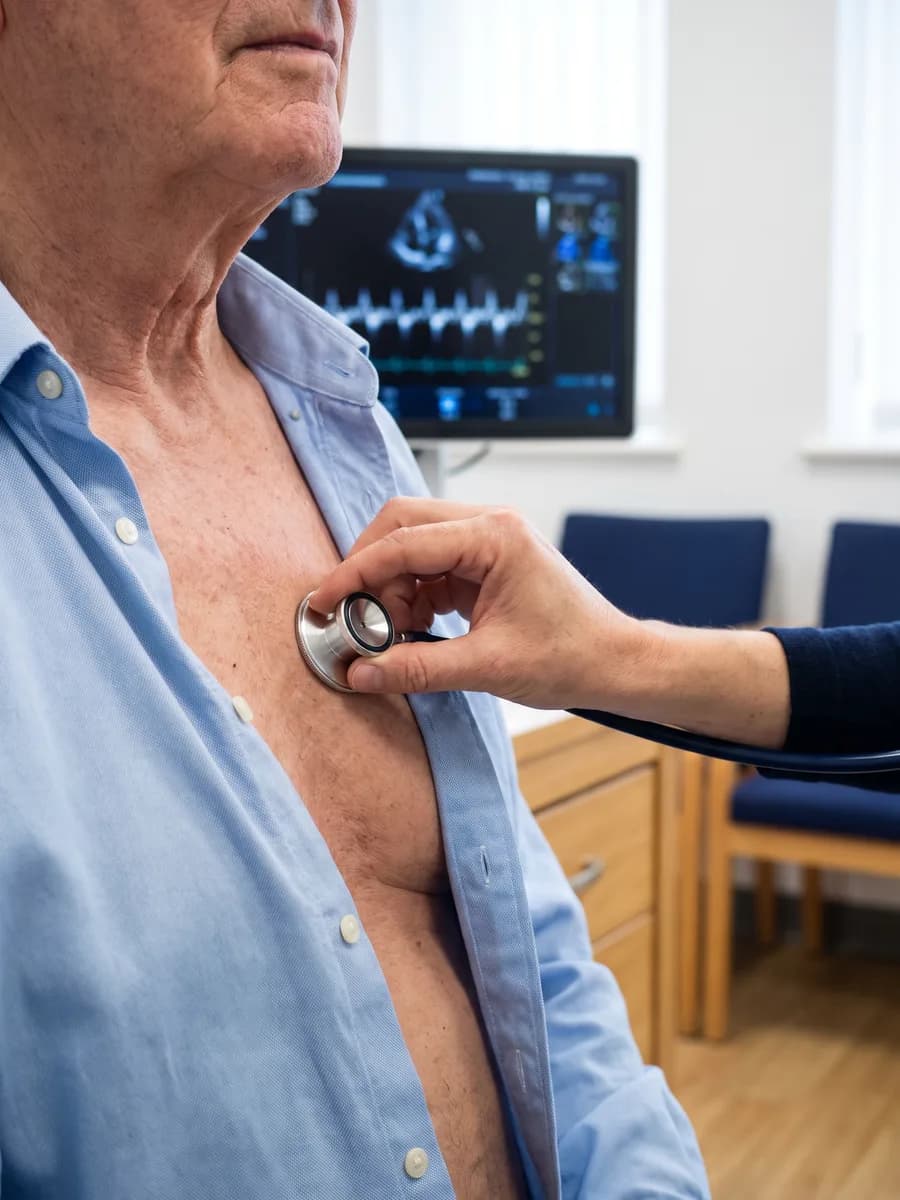
A heart murmur, a known narrowed valve or a leaking valve: we determine the severity precisely, monitor it regularly and find the right time for treatment.
What is it?
Four heart valves make sure that blood flows in one direction only. A valve can become narrowed (stenosis) or no longer close tightly (regurgitation). The most common conditions are narrowing of the aortic valve in older age and leaking of the mitral and tricuspid valves.
Valve disease often develops over years without symptoms. The current guideline of the European Society of Cardiology (2025) recommends earlier treatment of severe valve disease, in certain cases even before symptoms appear. Regular check-ups are therefore essential.
Typical symptoms and reasons for a visit
- A heart murmur heard during an examination
- Shortness of breath or reduced exercise capacity
- Chest tightness, dizziness or brief loss of consciousness on exertion
- Palpitations, fluid retention
- Known valve disease requiring regular monitoring
- Before and after a valve procedure
Emergency: If you lose consciousness on exertion, have chest pain at rest or sudden shortness of breath, call 112 immediately.
Diagnostics in this clinic
- Echocardiography (heart ultrasound)
- Stress echocardiography
- Resting ECG
- Exercise ECG
- Laboratory tests incl. NT-proBNP
In cooperation: transoesophageal echocardiography (TOE), cardiac CT, cardiac MRI
How it works
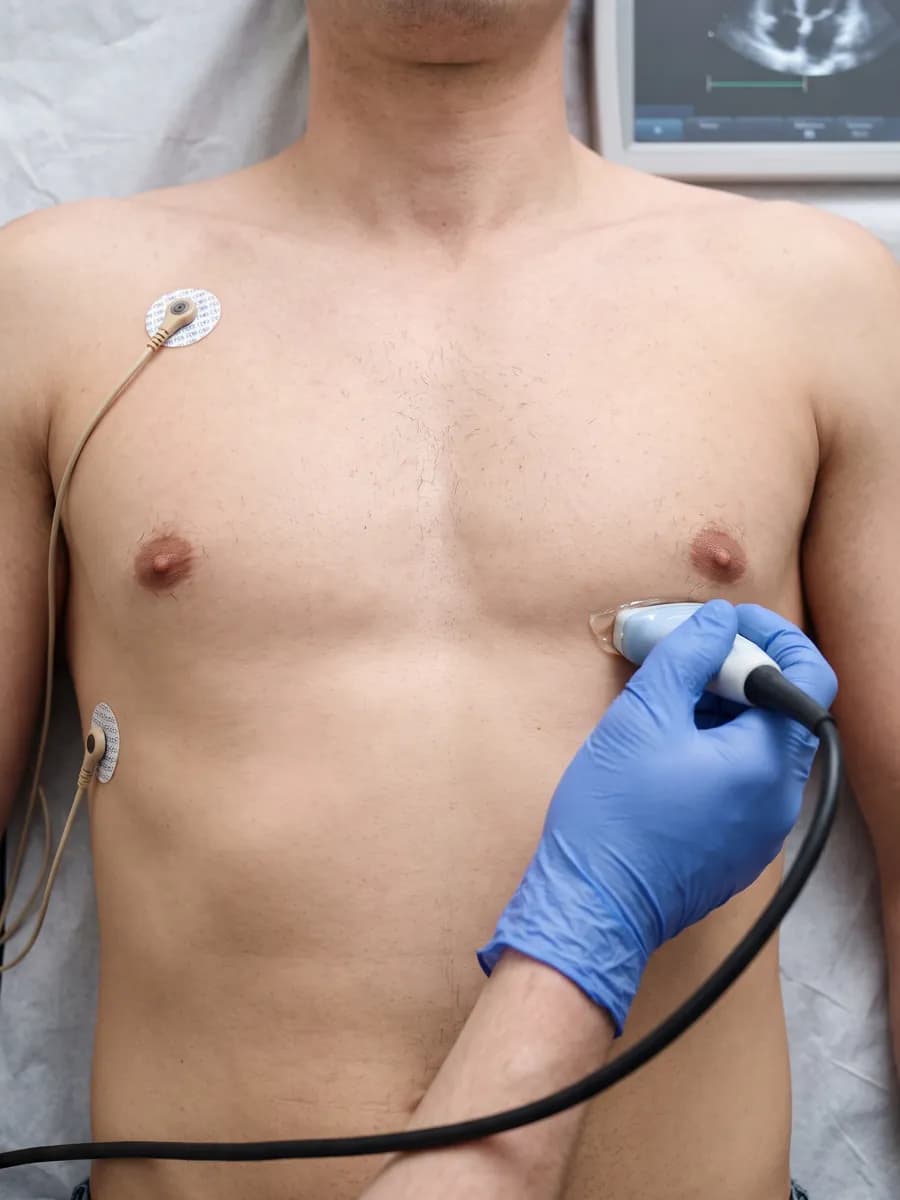
- 01Determining severity: heart ultrasound measuring pressure gradients, valve opening area, leakage and heart function according to the criteria of the professional societies.
- 02Clarifying unclear cases: stress echocardiography, e.g. for aortic stenosis with a low pressure gradient or severe valve disease without symptoms; an exercise test shows whether you are truly symptom-free.
- 03Planning check-ups: intervals depend on severity – less often for mild findings, about every six months for severe ones.
- 04Finding the right time: if treatment is needed, we refer you to a heart valve centre. The heart team of cardiologists and cardiac surgeons decides together with you between surgery and a gentle catheter procedure (catheter-based aortic valve replacement, catheter-based repair of the mitral or tricuspid valve). We then take over your follow-up care.
Follow-up after a valve procedure: baseline heart ultrasound, regular checks of valve function, management of blood-thinning treatment and advice on preventing infection of the heart's inner lining (endocarditis).
Duration & preparation
Approx. 30–45 minutes including heart ultrasound; stress echo on a separate appointment.
Please bring previous ultrasound reports, doctors' letters and your valve passport.
FAQ: Heart valve disease
Medically reviewed by Dr. med. (Univ. Sousse) Alaeddine Slama, Specialist in internal medicine and cardiology · Last updated: November 2026



Make an appointment
Online around the clock or by phone during our consultation hours.