
Measuring blood pressure correctly: 10 rules for reliable readings
High blood pressure
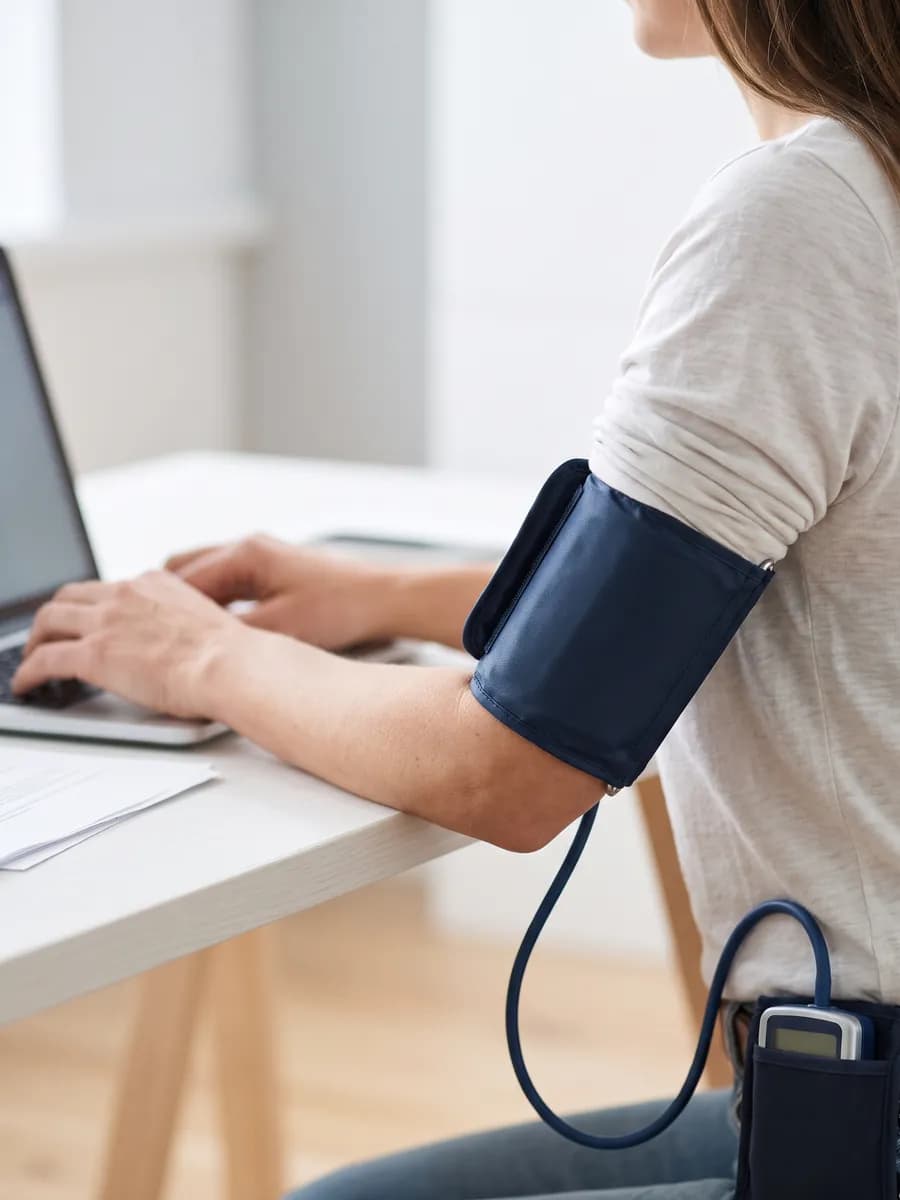
· 3 min read
Measured incorrectly, readings can easily be too high or too low. Here is how to get home readings that your doctor can actually use.
Medically reviewed by Dr. med. (Univ. Sousse) Alaeddine Slama, Specialist in internal medicine and cardiology · Last updated: November 2026
Home measurement is a valuable tool if it is done correctly. The following rules correspond to the recommendations of the German Hypertension League (Deutsche Hochdruckliga).
The ten rules
- 01
Use only a validated upper-arm device (e.g. with the seal of the German Hypertension League).
- 02
Sit quietly for five minutes before measuring.
- 03
Do not cross your legs; keep your back supported and your arm at table height.
- 04
Place the cuff on your upper arm at heart level, in the right size.
- 05
No coffee, nicotine or exercise for 30 minutes before measuring.
- 06
Empty your bladder before measuring and do not talk during the measurement.
- 07
Measure twice, one minute apart, and note the average.
- 08
Measure in the morning before taking your tablets and in the evening.
- 09
Record your readings for a week and bring them to your appointment.
- 10
Do not include the first day of measurements in the average.
When is blood pressure too high?
If the average of your home readings is 135/85 mmHg or higher, this indicates high blood pressure. Please have your readings assessed by a doctor. For readings above 180/110 mmHg with symptoms such as chest pain, shortness of breath, visual problems or weakness, call 112.
This article is for general information only and does not replace medical advice. If you have symptoms, please consult your doctor.
All articles